
The Fabric
Why We Chose Bamboo Over Polyester
Every synthetic performance shirt on the market — and why we still built ours from a plant
30 August 2026 · Wild Dunes
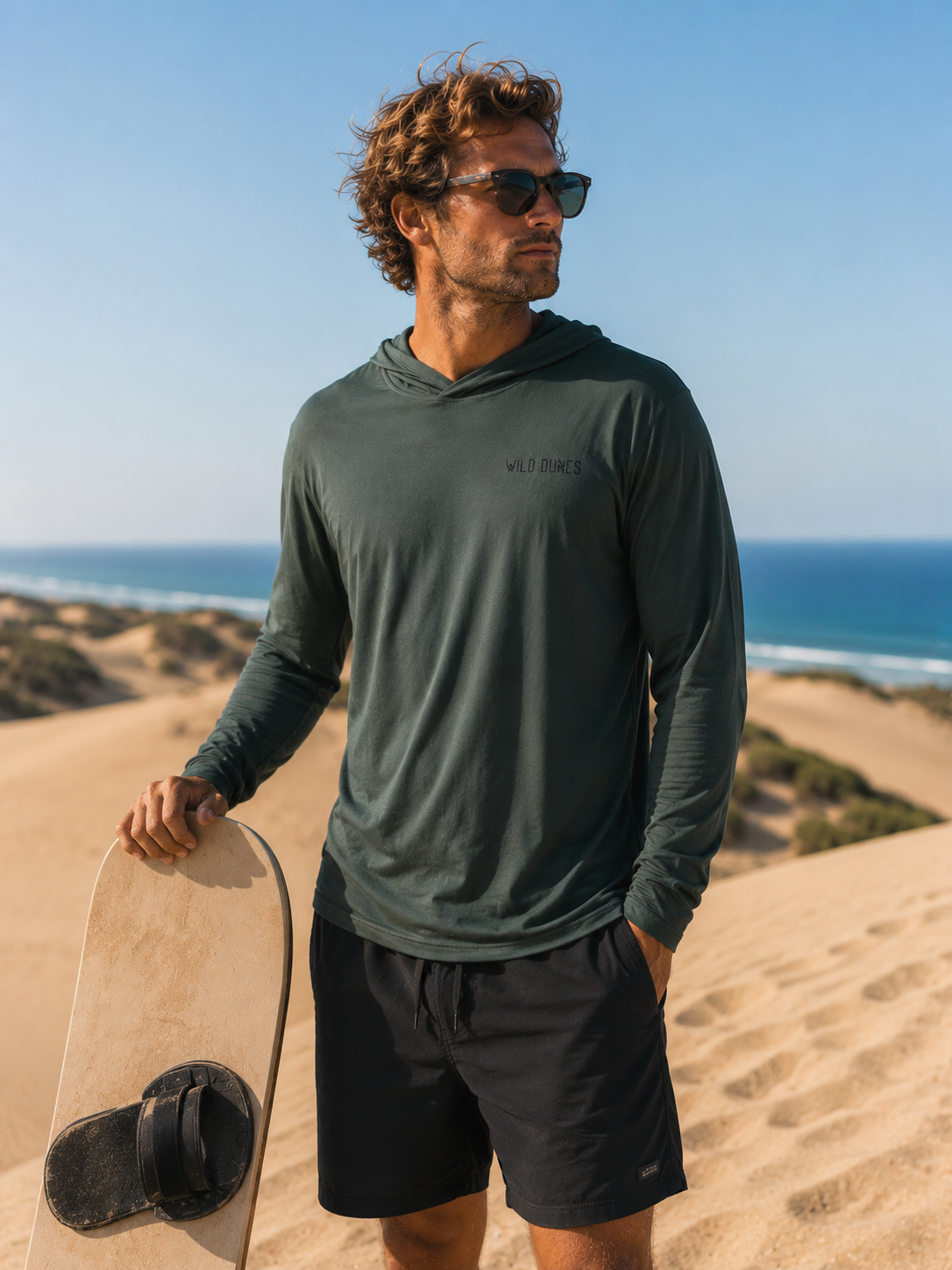
The first bamboo shirt we ever wore ruined polyester for us.
Nobody sets out to become a fabric person. But when you spend enough hours on the sand, in the tinnie, or hiked into the back of a Sunshine Coast national park, you start to notice things — the way your shirt smells at day's end, the way the sun gets through it, the way it clings when you break a sweat.
We tried every synthetic performance layer on the market. And then we tried bamboo. This is why we never went back.
1. Bamboo breathes. Polyester doesn't.
Polyester is plastic. Melted and spun into thread, then woven into shirts. That's not a shot — it's just the reality of it. Plastic has a job, and it does it well: cheap, strong, dries fast. What it doesn't do is breathe.
Bamboo fibre has natural micro-gaps in its structure — tiny channels that pull moisture off your skin and let heat escape. On a 32°C day walking flats at low tide, the difference isn't subtle. Polyester traps heat like a wetsuit. Bamboo moves it away from your body.
2. The UPF50+ story is different for each
Both fabrics can be rated UPF50+ — ours is. But how they get there matters.
Polyester's sun block is often a chemical treatment applied during finishing. It works, but it can degrade with wash cycles and sun exposure. After 30–40 washes, some polyester UPF shirts drop to UPF30 or lower.
Our bamboo-spandex weave achieves UPF50+ through fabric density and weave structure — not surface chemistry. That means the rating holds up over hundreds of washes and years in the sun. When we say your Wild Dunes shirt will still be UPF50+ in five years, we mean it.
3. Bamboo doesn't smell after one wear
This is the sleeper feature. Every fisherman knows the drill: you wear a synthetic shirt for a day out and by 3pm it smells like a fridge. Wash it, wear it, same result the next weekend.
Bamboo has a natural antibacterial compound called bamboo-kun that resists odour-causing bacteria without any added chemicals. In practice: two, sometimes three wears between washes. Which extends the shirt's life and cuts your laundry.
4. On the sustainability angle
We didn't start Wild Dunes to lecture anybody. But you'll want to know the numbers:
- Bamboo grows without pesticides or fertiliser and regenerates from the root — you never replant it
- Bamboo uses one-third the water of cotton to produce the same amount of fibre
- Polyester sheds microplastics every wash — into your washing machine, into the water, eventually into fish (and back onto your BBQ)
The 5% spandex we blend for stretch is not perfect. Nothing textile is perfect. But choosing 95% plant-based fibre over 100% petrochemical plastic is a real, measurable choice — and one that gets easier every year as bamboo processing improves.
5. It just feels better
Ultimately this is why our customers come back. Bamboo has a hand-feel closer to premium cotton than any synthetic — soft, dense, quiet against the skin. Polyester always feels like polyester. You can't hide it.
We built the Wild Dunes shirt around this simple idea: you shouldn't have to choose between technical performance and something that feels good to wear. Bamboo, done right, gives you both.
Ready to feel it for yourself? Have a look at the Bamboo Shirt in Forest Green or Sea Green. Free AU shipping over $100.
More from the Journal
Read all field notes →